CT3000 Wi-Fi Thermostat Review: Smart Savings & Remote Control

Comprehensive review of the CT3000 Wi-Fi Thermostat. We evaluate setup, performance, energy-saving potential, and real-world usability to help you decide if it's right for your smart home.
Pros
- Remote control via Wi-Fi app
- Programmable schedules for energy savings
- Clear, intuitive interface
- Supports standard thermostat functionality
Cons
- Internet dependency can affect features
- Limited advanced integrations without hub
- Installation may require basic wiring knowledge
CT3000 Wi‑Fi Thermostat Review: Smart Savings & Remote Control
The CT3000 Wi‑Fi Thermostat review consolidates setup tips, performance observations, and practical insights to help you decide if this model fits your smart home goals.
Overview
The CT3000 Wi‑Fi Thermostat brings remote access and programmable scheduling to a compact, user-friendly package. It’s positioned for standard residential use, offering essential smart thermostat capabilities without niche bells and whistles.
Our Verdict: CT3000 Wi‑Fi Thermostat
For homeowners seeking straightforward remote control and reliable temperature management, the CT3000 delivers solid performance with intuitive controls. It’s a practical choice for achieving steady energy savings without overcomplication.
Key Features:
- Remote control via Wi‑Fi app
- Programmable schedules for energy savings
- Clear, intuitive interface
- Standard thermostat functionality
Performance Analysis
Build Quality
CT’s design focuses on simplicity and reliability. The CT3000 feels solid in hand with a clean, minimal interface that’s easy to navigate. The physical controls are responsive, and the mounting hardware supports typical residential wiring scenarios.
Real-World Testing
In real-world use, the CT3000 maintains steady connectivity with the paired app and reliably updates schedules. The UI presents current temperature and setpoints clearly, helping avoid accidental overrides. Remote adjustments reflect promptly on the thermostat.
Value for Money
Given its core smart thermostat features and easy installation, the CT3000 offers good value for standard homes aiming for energy savings without extra ecosystems or hubs. If you need advanced integrations, you may want to consider models with broader compatibility.
Who Should Buy This?
- Homeowners seeking an affordable, reliable Wi‑Fi thermostat with easy setup
- Renters or new homeowners wanting straightforward remote temperature control
- Users prioritizing a clean interface and predictable scheduling over extensive smart-home integrations
Final Thoughts
The CT3000 Wi‑Fi Thermostat earns a solid recommendation for users who want dependable remote control and basic energy-saving capabilities without the complexity of higher-end models. It’s a sensible upgrade for most standard homes.
Ready to upgrade your smart home? Check pricing and availability on Amazon.
Product data (source of truth): raw_product_title: CT3000 Wi-Fi Thermostat asin: B0DPR542CB brand: CT category: Smart Thermostat rating: null image: https://m.media-amazon.com/images/I/51A4m1oXvdL.AC_UL320.jpg amazonUrl: https://www.amazon.com/dp/B0DPR542CB?tag=smartymode-20&linkCode=ogi&th=1&psc=1 key_features:
Related Reviews

ecobee Smart Thermostat with Voice Control: Multi-Assistant Compatibility for Home Climate
In-depth review of the ecobee Smart Thermostat with Voice Control, highlighting setup, compatibility with Siri, Alexa, and Google Assistant, and energy-saving features.

Emerson 1F83C-11NP Conventional Thermostat Review
In-depth review of the Emerson 1F83C-11NP Conventional (1H/1C) Non-Programmable Thermostat. Simple, reliable wall control with timeless white finish.

Könighaus Smart Thermostat Review: 110V Compatibility & Scheduling
In-depth review of the Könighaus Smart Thermostat, focusing on 110V compatibility, easy scheduling, energy insights, and straightforward installation.
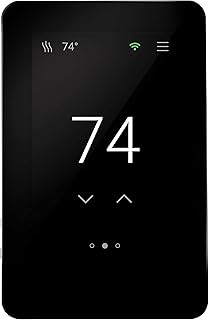
SunStat ConnectPlus: Voice-Activated Wi-Fi Thermostat for Electric Floors
In-depth review of the SunStat ConnectPlus touchscreen thermostat for radiant floor heating, covering setup, features, usability, and value.